
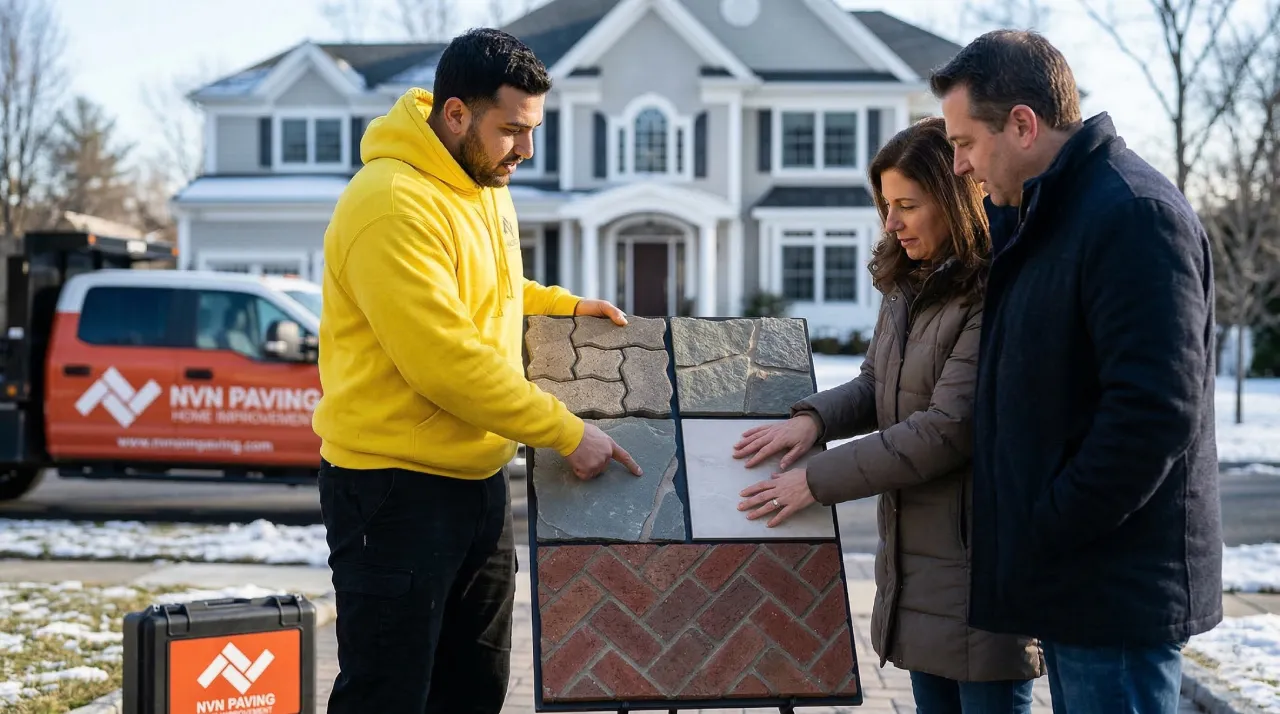
Choosing the perfect pavers for a backyard patio in Bergen County, NJ, means finding a style that complements the property’s architecture and withstands the freeze-thaw cycles of winter.
You can quickly upgrade your curb appeal, improve functionality, and enhance the overall enjoyment of your outdoor space, but creating that dream means finding the right pavers and a local paving company to help with the process.
First Things First: Select NJ-Friendly Materials
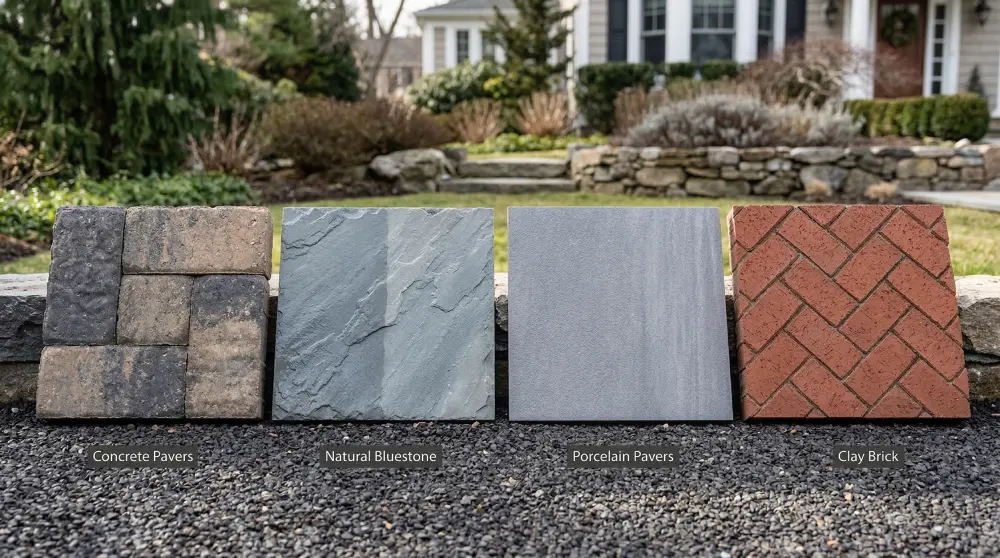
Before you begin the details of your fire pit for bonfires with the neighbors, selecting NJ-friendly materials is critical for a successful installation.
There are many options to choose from, but each has very different pros and cons.
- Concrete pavers are durable, available in various styles, and remain NJ’s top choice as they withstand freezing temperatures.
- Bluestone is another popular option, but it can fade in direct sunlight without proper maintenance and sealant.
- Porcelain is highly durable and resistant to slipping and staining, making it a great option for pool deck areas.
- Brick is still a timeless classic, but it can be finicky for ground contact use.
Critical Installation Factors of an NJ Outdoor Living Space
In New Jersey, your patio’s longevity depends on the base. Discussing these terms with backyard patio pavers for NJ climates can help you find reputable options.
Every patio space must begin with serious base preparation and secure edge restraints to prevent the stones from shifting over time.
All drainage and slope issues must be addressed, and using permeable pavers can be ideal for reducing runoff.
Consider Climate and Safety for Every Outdoor Space
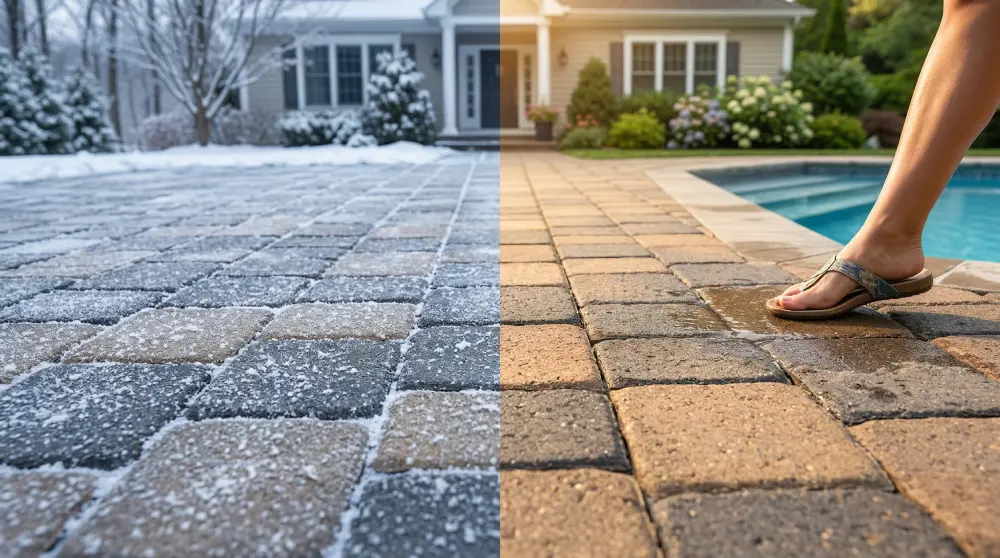
Designing anything outside, from outdoor kitchens to patio pavers, you have to consider the climate.
With NVN Paving: New Jersey’s premier hardscape specialists, our team assists customers in considering the three main details:
- Freeze-Thaw Durability.
- Slip Resistance.
- Color Stability.
Picking the Right Materials with Practical Details
You will still want to pay attention to the budget and consider what future maintenance will look like.
Plus, hiring reliable patio pavers who are certified by the Interlocking Concrete Pavement Institute (ICPI) is crucial to ensure proper installation.
Top Durable Materials from Franklin Lakes to Saddle River
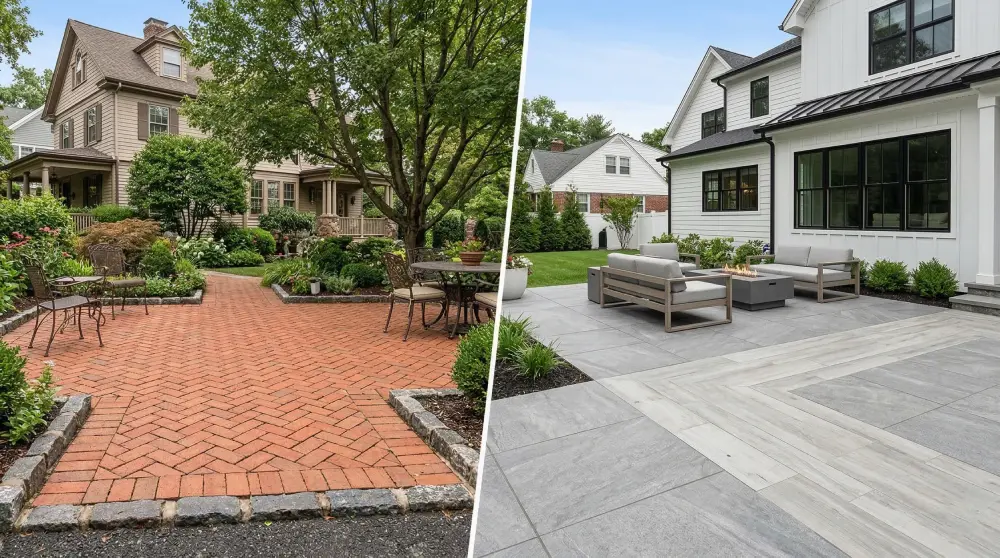
New Jersey homeowners must understand that environmentally suitable materials mean doing what the climate demands to improve the operation and design of their property.
Review the Area with Patio Builders
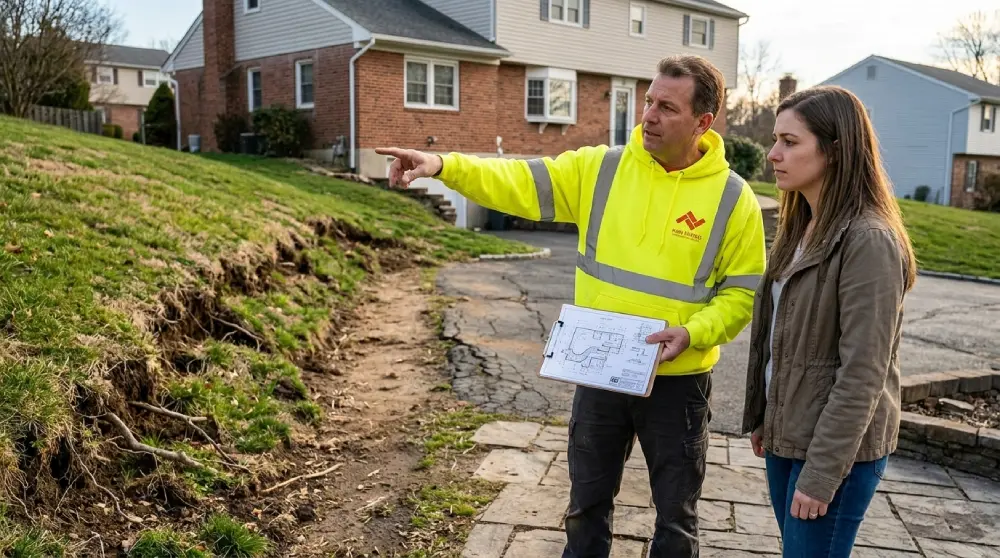
Taking a deeper look at what you are looking for in an outdoor space and the area you need assistance with makes a difference.
We can assist with professional NJ driveway paving & installation, retaining walls, walkways, patios, and garden paths for premium landscaping options.
However, the area you need support with affects the pavers you choose for the outdoor living space.
Walkways
Dealing with walkways means using materials that provide stability and grip for higher foot traffic, especially during rain, snow, and icy conditions.
Most homeowners find that, in the long run, the best decision for these projects is a more Victorian style.
- Herringbone Brick Patterns: This is one of the strongest interlocking patterns, rendering it ideal for heavy-traffic paths.
- Cobblestone Borders: Define the walkway with Granite Cobblestone Blocks to ground the design in history.
Garden Paths
Garden pathways are very different from driveways or patios, as they call for a more organic design with plantings and greenery surrounding the area.
You may opt for any of the following ideas:
- Irregular flagstone for the growth of thyme and moss, permitting a more natural feeling.
- Curved pathways, staying away from straight lines.
- Stepping stones for visitors and a walkway for visitors.
Your Complete Guide to Installation Costs in New Jersey
Get a full scope of the potential costs with our New Jersey paving & installation cost guide:
| Project Type | Basic Cost | Premium Cost | Avg. Sq. Ft. |
|---|---|---|---|
| Full Patio | $14 – $25+ / sq. ft. | $18 – $35+ / sq. ft. | 300 – 400+ |
| Walkway | $10 – $20 / sq. ft. | $15 – $25 / sq. ft. | 50 – 150 |
| Garden Path | $8 – $16 / sq. ft. | $10 – $20 / sq. ft. | Variable |
Maintenance Steps with Patio Concrete Pavers
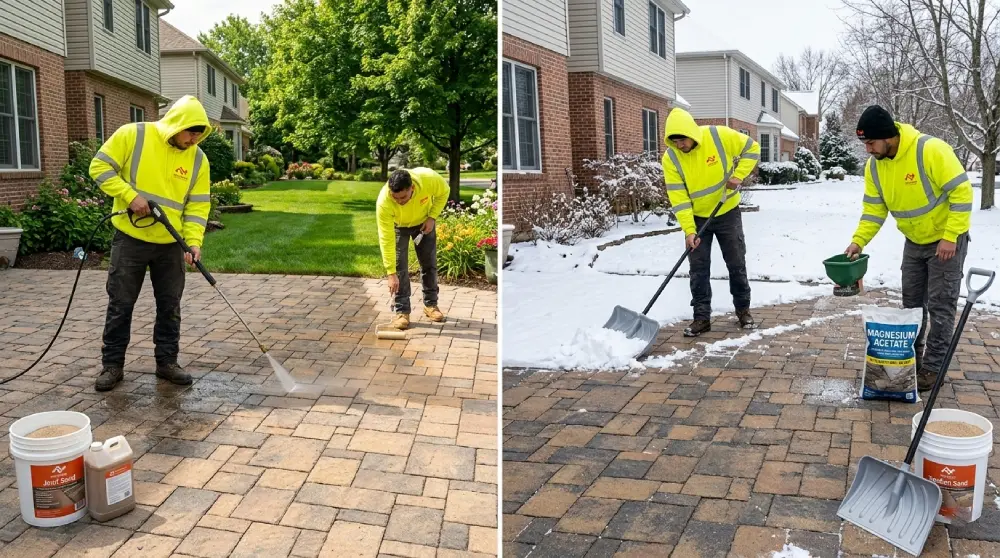
Maintenance is a continuous process with every paver patio.
In the spring and summer, you will want to clean to remove winter grime and mess, and seal the surface.
In the fall and winter, basic cleaning, snow removal, and proactively using sand or magnesium acetate instead of rock salt are important.
Core Long-Term Steps with the Right Patio Pavers
- Sealing: The single most important step for NJ weather. It prevents water from entering the material’s pores, which is what leads to cracking when that water freezes and is required every few years.
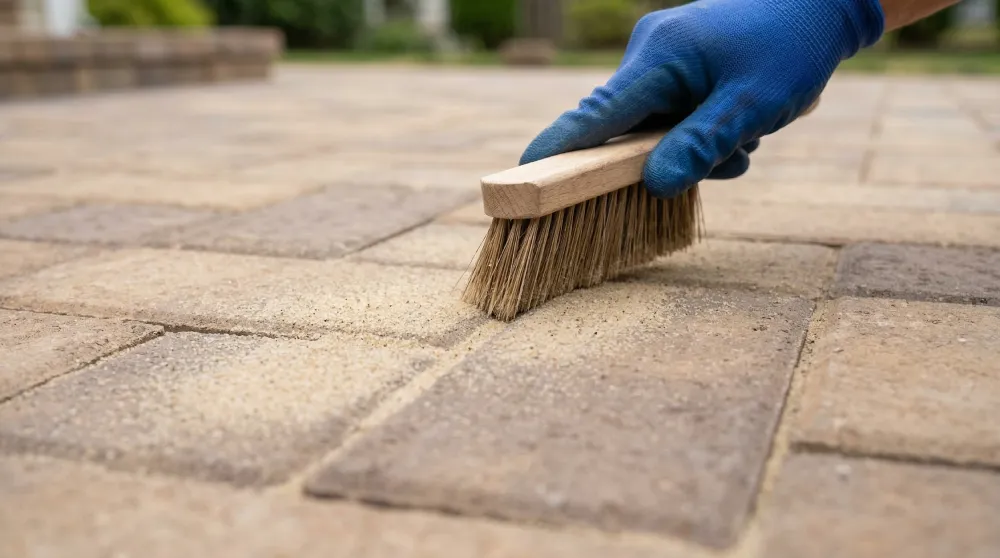
- Joint Sand Upkeep: Use polymeric sand for the joints. It hardens when wet, creating a semi-rigid barrier that resists washouts and prevents weeds from taking root. Top off the sand every few years as it erodes.
- Pressure Washing Caution: While effective for deep cleans, keep the pressure under 1,500 PSI and the nozzle at least 2 feet away to avoid damaging the paver’s finish or blowing out the joint sand.
Total Upkeep Comparison
| Maintenance Task | Frequency | Estimated Cost |
|---|---|---|
| Sweeping/Rinsing | Weekly/Monthly | $0 |
| Weed Removal | As needed | $10 – $30 (Tools/Vinegar) |
| Polymeric Sand Refill | Every 2–5 years | $30 – $60 (Per bag) |
| Professional Sealing | Every 2–3 years | $400 – $1,000+ (Typical patio) |
Common Questions with NJ Patio Pavers
Contact the Best Patio Pavers in Bergen County for Your Free Consultation
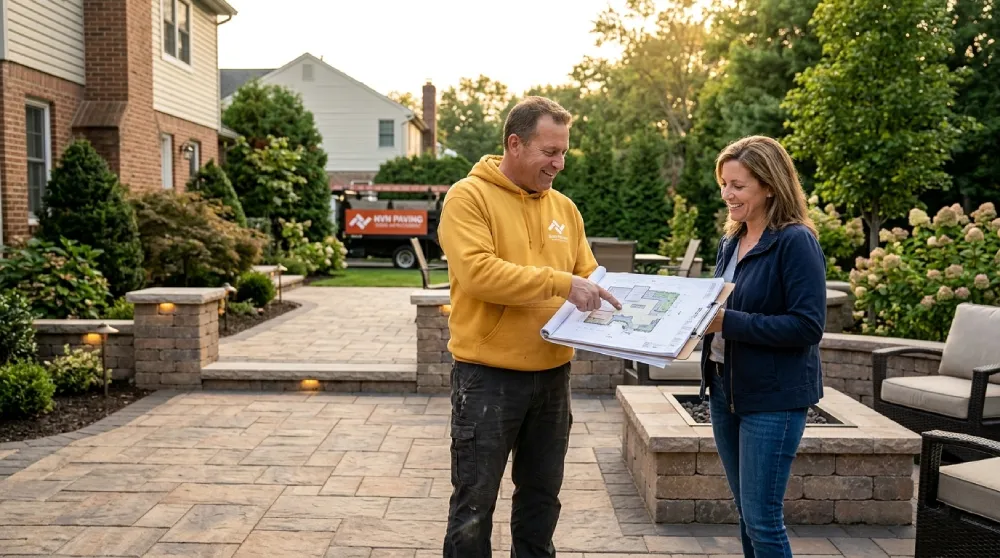
When it comes to our final thoughts choosing pavers or other landscaping materials, we always recommend striking a balance between aesthetics and durability.
Learn more about our NJ hardscaping expertise as our team of patio builders has decades of experience in these kinds of transformations.
If you are ready to transform your backyard, contact NVN Paving at (201) 304-7345 or visit our site to schedule your free consultation and receive a detailed, no-obligation quote.



