
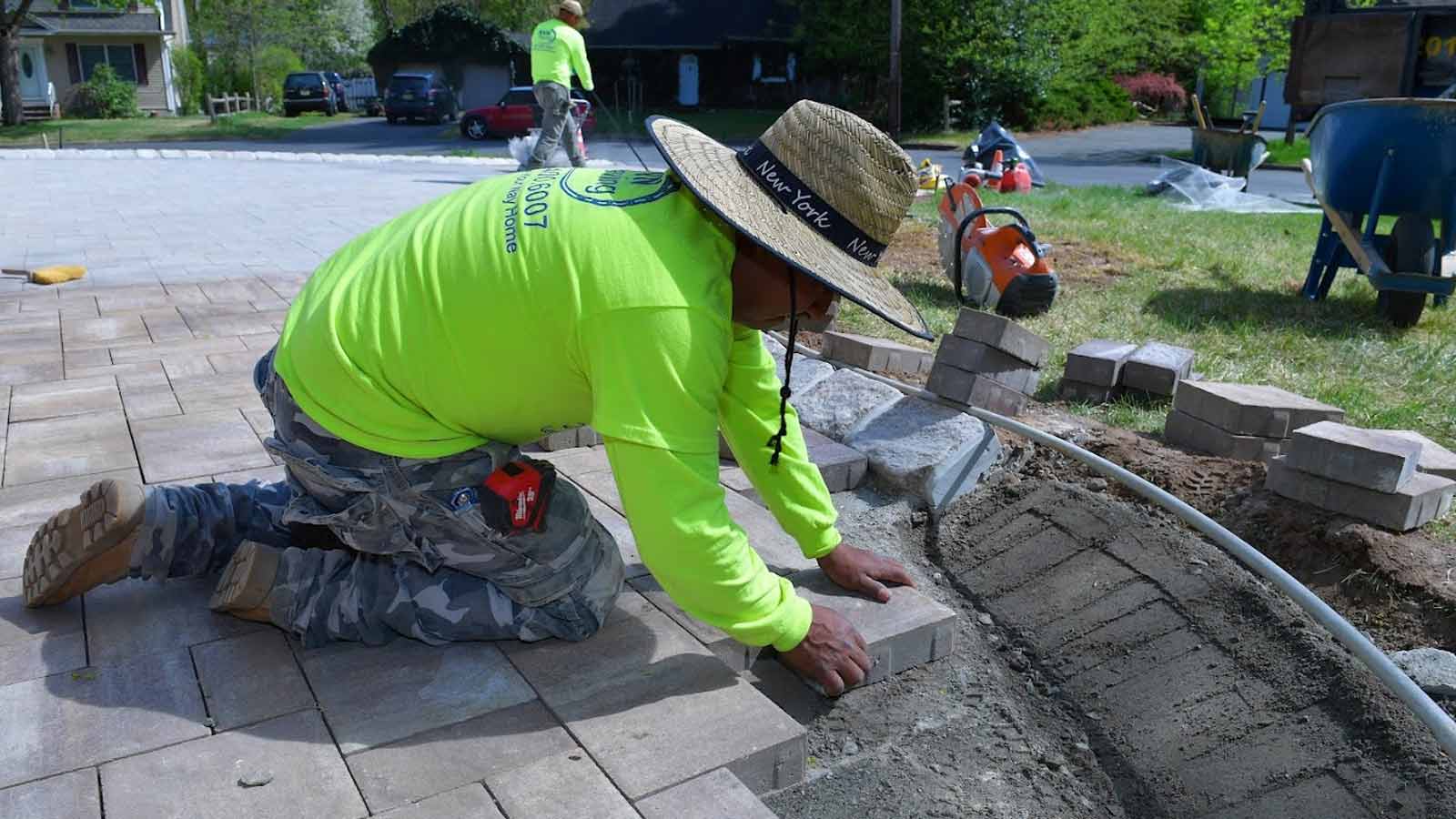
Fast free estimates for parking lots, HOA roadways, retail plazas and municipal paving across Bergen County, NJ.
Licensed and insured. Night and weekend crews available. Homeowners: see our driveway paving in Bergen County page.
Why Bergen County Property Managers and Municipalities Choose NVN Paving
Specs built for North Jersey freeze and thaw cycles
Commercial and residential paving crews, with phasing that keeps your business open while we work
Base prep, drainage planning, and compaction targets spelled out in writing
Clear pricing, photos of similar jobs, and a written warranty
One accountable asphalt paving contractor from estimate through striping and maintenance
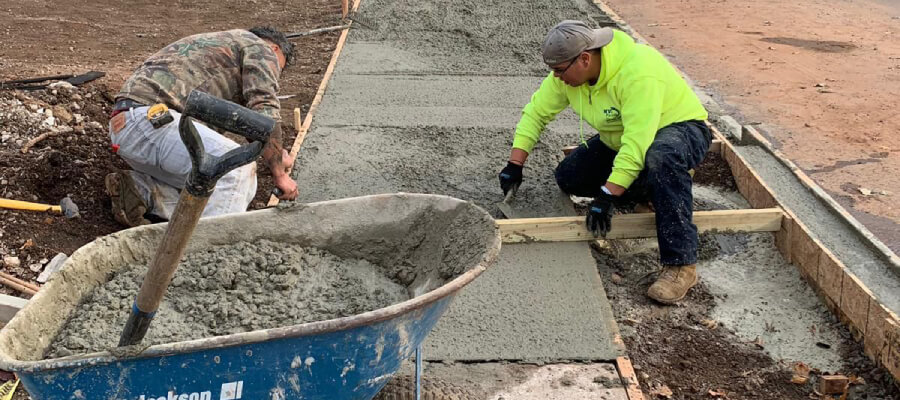
Commercial Asphalt Paving & Concrete Work in Bergen County
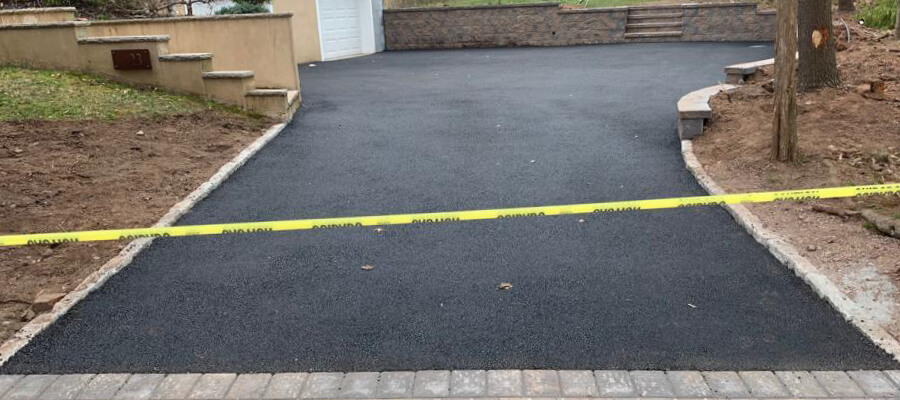
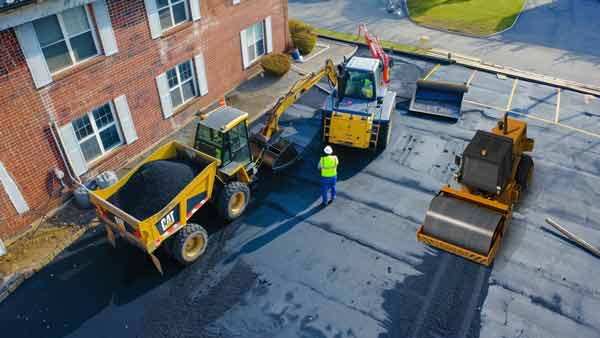
Asphalt Paving
Full-depth asphalt paving installs, overlays, and milling with correct lifts and compaction.
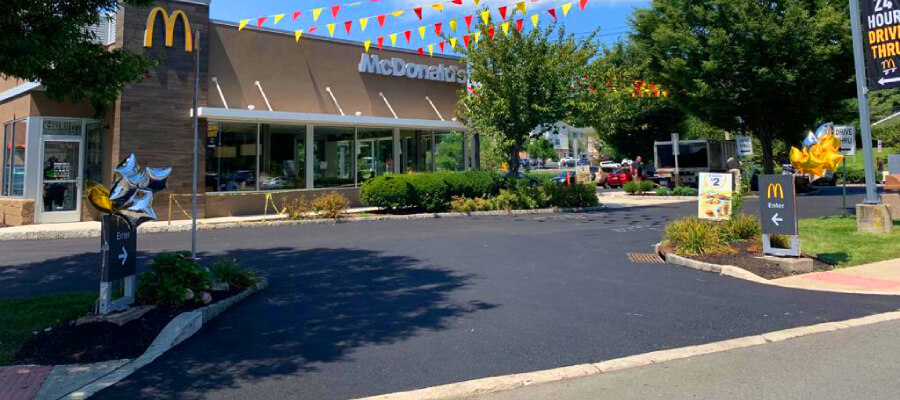
Commercial Asphalt
Commercial paving services for retail, medical, industrial, schools, HOAs, and municipalities, with traffic control plans.
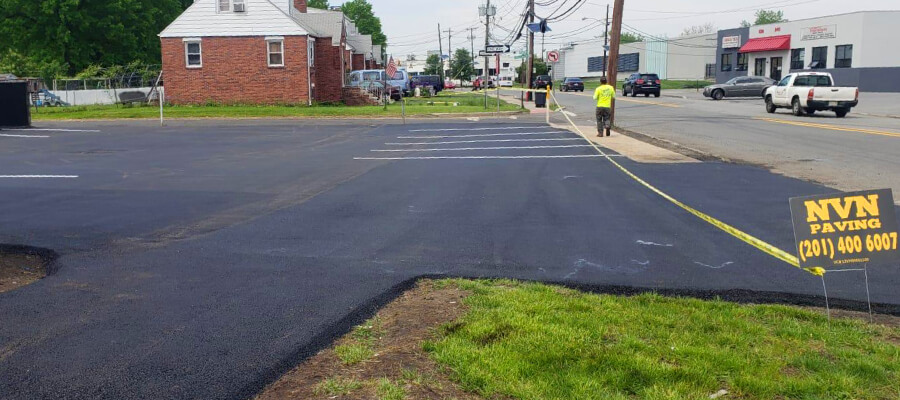
Parking Lot Paving
Phased scopes, ADA access routes, loading areas, and drainage fixes.
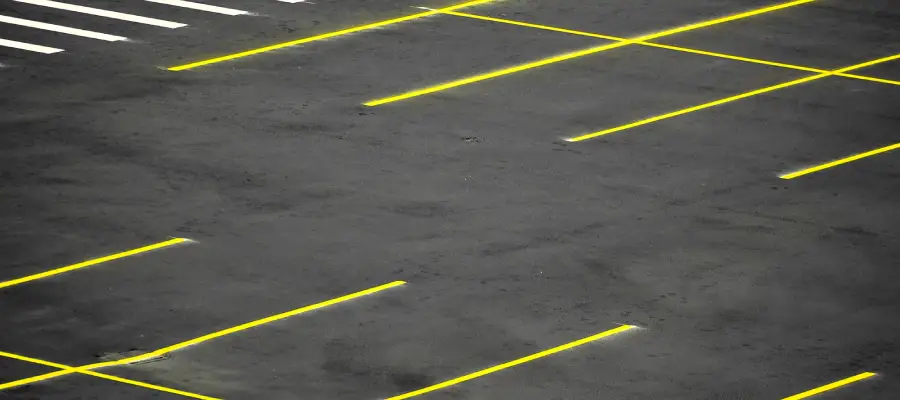
Parking Lot Striping:
High-visibility layouts, ADA stalls, arrows, fire lanes, and stencils.
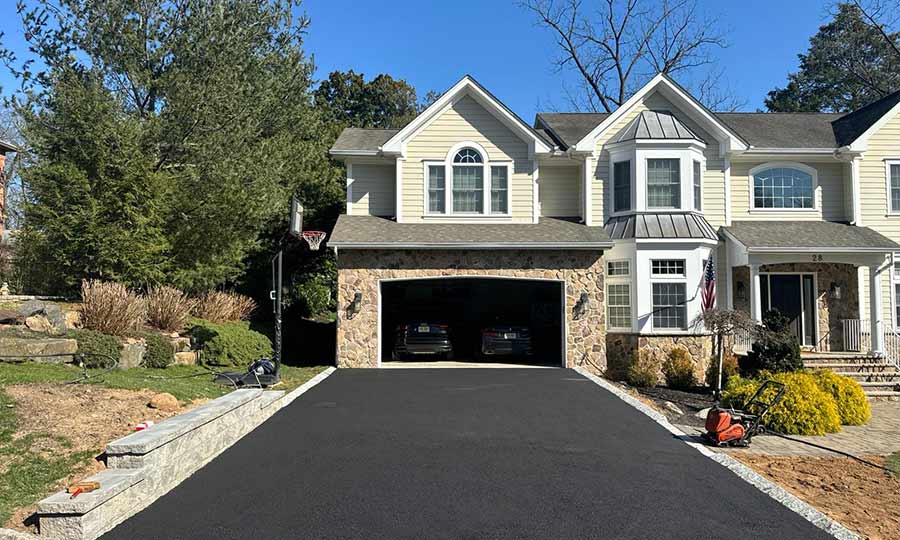
Driveway Paving
Residential paving with re-grading, base reconstruction, aprons, and transitions to garage slabs.
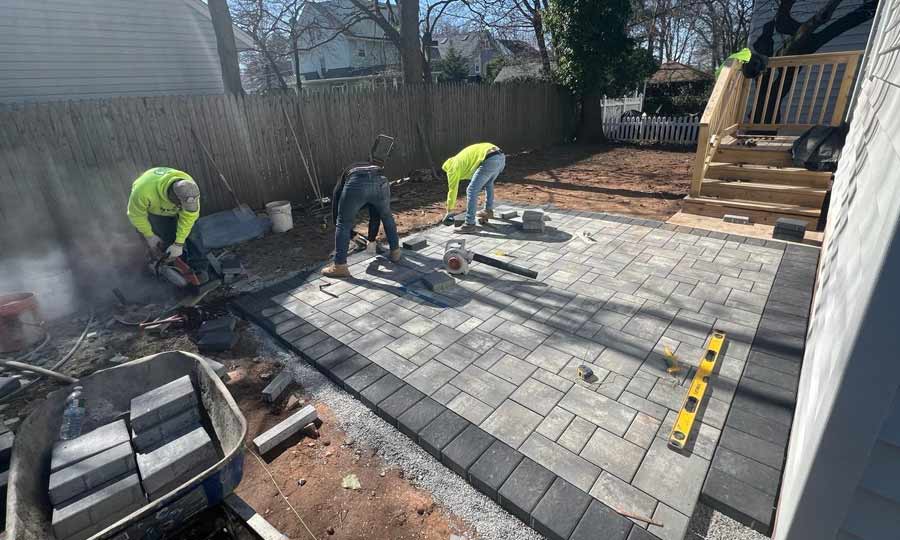

Sealcoating
Protects against UV rays, salt, and spills. Best on 24–36-month cycles.
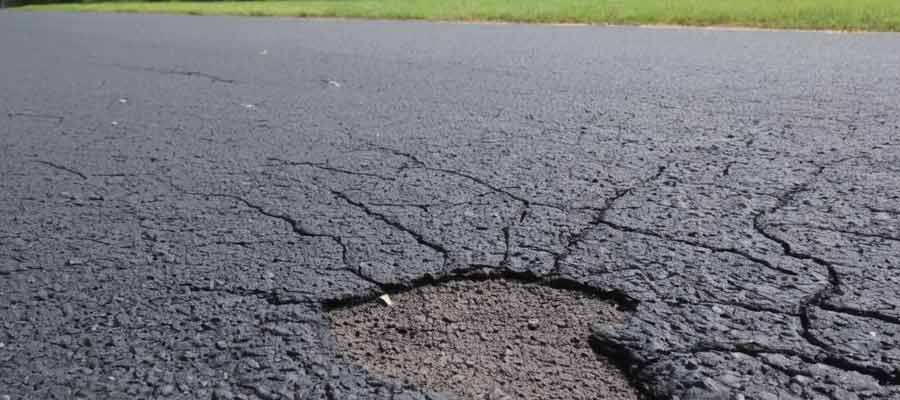
Crack Repair
Crack filling with routing and hot-pour sealant to stop water intrusion.
Emergency Repair
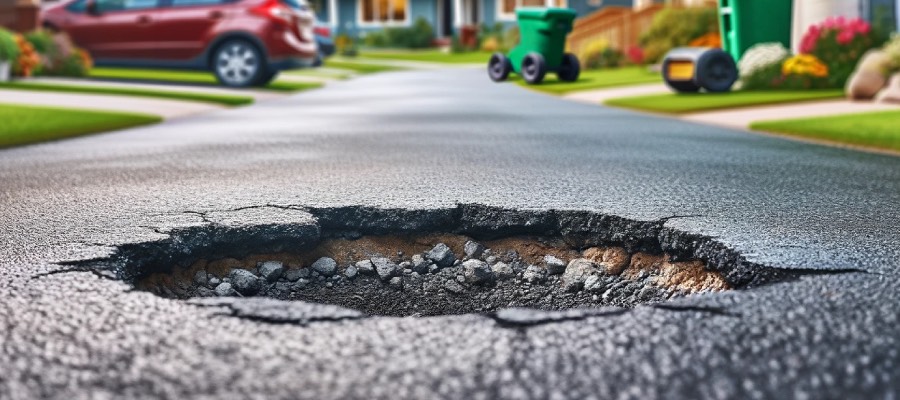
Emergency repair services: trip-hazard removals, pothole stabilization, and overnight safety patches.
Municipal-Scale Paving in Bergen County
Bergen County has 70 municipalities, and a lot of local pavement behaves like a town road even when a private owner holds the deed.
HOA roadways, campus loops, church lots, school lots, and shared drives all carry daily traffic, plow passes, and drainage loads that a standard driveway never sees.
That scale of work is our lane.
Private roadway resurfacing and mill-and-pave programs for HOAs and campuses
Parking lot paving in Bergen County: reconstruction, sealcoating, and striping for large commercial lots
ADA ramps, crosswalk striping, and school-zone markings on private sites
Catch basin repair and drainage corrections before paving, not after
Walking paths, playground aprons, and equipment-yard pavement
One thing we keep transparent: publicly bid municipal contracts in New Jersey require a registered public works contractor, so our municipal-scale work is for private and institutional owners.
If your property carries town-level traffic and a town-level budget, you want a paving contractor who builds to that spec.
Managing pavement for an HOA, a school, or a commercial campus?
Call (201) 304-7345 for a scope walk and a line-item budget number you can bring to your next board meeting.
Our Proven Process (Built for North Jersey)
-
On-Site Assessment & Quote
Measure traffic loads, subgrade, and drainage; provide line-item options.
-
Prep & Base
Demo, re-grading to 1–2% slope, geotextile (as needed), and 4–8" compacted aggregate base.
-
Edges & Containment
Shoulder reinforcement, Belgian block, or concrete curbing where specified.
-
Paving & Compaction
Correct mat temperatures; steel and pneumatic rolling to target density.
-
Markings & Safety
ADA stalls, crosswalks, stop bars, fire lanes, and wayfinding.
-
Care Plan
Crack sealing and sealcoating schedule to match usage and exposure.
Recent Work & Warranty
See before/after photos of Bergen County parking lots and driveways in our gallery: Our work
All scopes are covered by a written warranty with clear conditions and response times: Limited warranty
Where We Pave in Bergen County
From the Hudson Palisades to the Ramapo foothills, our asphalt paving crews work the whole county:
Shopping corridors, quiet cul-de-sacs, warehouse districts, and downtown main streets.
We service riverfront communities with steep grades and tight access—Edgewater, Fort Lee, Cliffside Park, Palisades Park, Leonia, and Ridgefield—where drainage and curb transitions matter on every project.
Around the county core—Hackensack and its neighboring towns Teaneck, Englewood, Englewood Cliffs, Bogota, Ridgefield Park, and Lodi—we handle medical campuses, retail centers, and multi-family lots with night and weekend phasing.
High-traffic sites and large parking fields along 4/17 in Paramus, extending north through River Edge, Oradell, Emerson, and Rochelle Park, up to Ramsey, Mahwah, and Upper Saddle River.
Expect precise staging, clear access lanes, and fast striping turnarounds.
Estate driveways, private lanes, and HOA roads in Saddle River, Upper Saddle River, Allendale, Ho-Ho-Kus, Waldwick, Wyckoff, and Franklin Lakes, where freeze/thaw and tree-root pressure call for stout bases and clean edges.
Distribution and light-industrial lots near I-80/Route 46 in Lyndhurst, North Arlington, Rutherford, East Rutherford, Carlstadt, and Wallington, plus adjacent neighborhoods in Garfield and Elmwood Park—phased work keeps docks and doors open.
Residential streets and town centers in Montvale, Park Ridge, Woodcliff Lake, Hillsdale, River Vale, Westwood, Washington Township, and Emerson, with careful water-shedding profiles on sloped drives.
Driveways and small-lot retail in Fair Lawn, Glen Rock, Tenafly, Cresskill, Demarest, Closter, Norwood, Northvale, and Old Tappan, plus nearby enclaves Harrington Park and Haworth.
We're also regularly on-site in Dumont, New Milford, Maywood, Little Ferry, Saddle Brook, Ridgewood, River Edge, and Oakland—and we schedule nearby neighborhoods the same week when possible.
Paving FAQs in Bergen County
How long will a driveway or lot last in Bergen County?
With proper base preparation, drainage, and a sensible maintenance plan, residential asphalt driveways typically perform for 15–20 years. Commercial parking lots carry heavier traffic and often reach 12–15 years before major rehabilitation is due. Timely crack sealing and periodic sealcoating help you reach the upper end of those ranges.
What thickness do you use?
Asphalt paving lift design depends on use. Light-duty residential driveways commonly receive a 2″ surface course over 4–6″ of compacted aggregate base. Heavy-duty and high-traffic areas add a binder course and a thicker base to resist rutting and shear. That extra structure is standard practice for Bergen County freeze and thaw.
Can you work after hours?
Yes. Evening and weekend paving minimizes disruption for retail, healthcare, logistics, schools, and HOAs. We stage traffic control and safe access so your operations can continue.
Do you handle ADA compliance and signage?
Absolutely. Layouts include accessible routes, van-accessible spaces with access aisles, compliant slopes, crosswalks, stop bars, fire lanes, and the required signage and stenciling.
Is it okay to put new asphalt over old asphalt?
Often, yes. That job is called an overlay. If the existing pavement has a sound base, workable drainage, and only surface distress, an overlay restores a smooth finish for far less than a full repaving. Milling first corrects transitions at garages and drains, birdbaths get fixed, and structural cracks get sealed. If the old surface shows widespread alligator cracking or base failure, full-depth replacement is the smarter long-term call.
Is it cheaper to asphalt or concrete a driveway?
Up front, asphalt usually costs less than concrete. Concrete can last longer in some settings, but the initial price is higher and repairs tend to cost more. Asphalt also installs faster. Simple upkeep, meaning crack sealing plus sealcoating on a 24–36 month cycle, protects the surface for the long haul
How much does driveway paving cost in Bergen County, NJ?
Most Bergen County asphalt driveway installations fall in the mid four-figure to low five-figure range. Pricing depends on size, access, edging, base work, and drainage adjustments. Small, straightforward replacements land lower. Large footprints or major base reconstruction push costs higher. See our 2026 Bergen County driveway paving cost breakdown for numbers by driveway size. Planning a new driveway? A short site visit gets you a line-item estimate.
What is the downside of a paver driveway?
Pavers deliver standout curb appeal and creative borders. The tradeoffs:
- Higher upfront cost than asphalt.
- More meticulous base prep.
- Potential joint weed growth without upkeep.
- Minor settlement that may require re-leveling.
Snow removal also demands care, since a plow blade can catch paver edges.
When not to pave a driveway?
Skip repaving when the subgrade is saturated or unstable, when frost is active, during long cold or wet spells, or right before planned utility work. If permits, drainage corrections, or tree-root issues are still open, settle those first. Paving over a weak base in marginal weather risks compaction problems and early failure. Bergen County winters punish shortcuts.
What is the average price to get your driveway paved?
For typical suburban footprints, many homeowners see totals cluster around the mid four figures, and larger or more complex projects run higher. To price the installation, confirm square footage, base condition and access, and any extras such as milling, aprons, curbing, or drainage improvements. An itemized proposal lets you pick the configuration that fits your budget.
Do you handle municipal-scale paving in Bergen County?
Yes, for private and institutional owners. We build HOA roadways, church lots, school lots, ADA upgrades, and catch basin repairs at town-road scale. Publicly bid borough or township contracts in New Jersey require a registered public works contractor, so for that work, start with the state’s registered contractor list.
How do I compare paving companies in Bergen County?
Free estimates are standard in Bergen County, so collect two or three written bids with the same scope: base depth, asphalt thickness, drainage plan, and compaction targets. Then check that the asphalt paving contractor holds a New Jersey HIC license, insurance, and a written warranty. A local yard and recent jobs in your town tell you the asphalt contractor actually works here. The cheapest bid with the thinnest base loses long term.
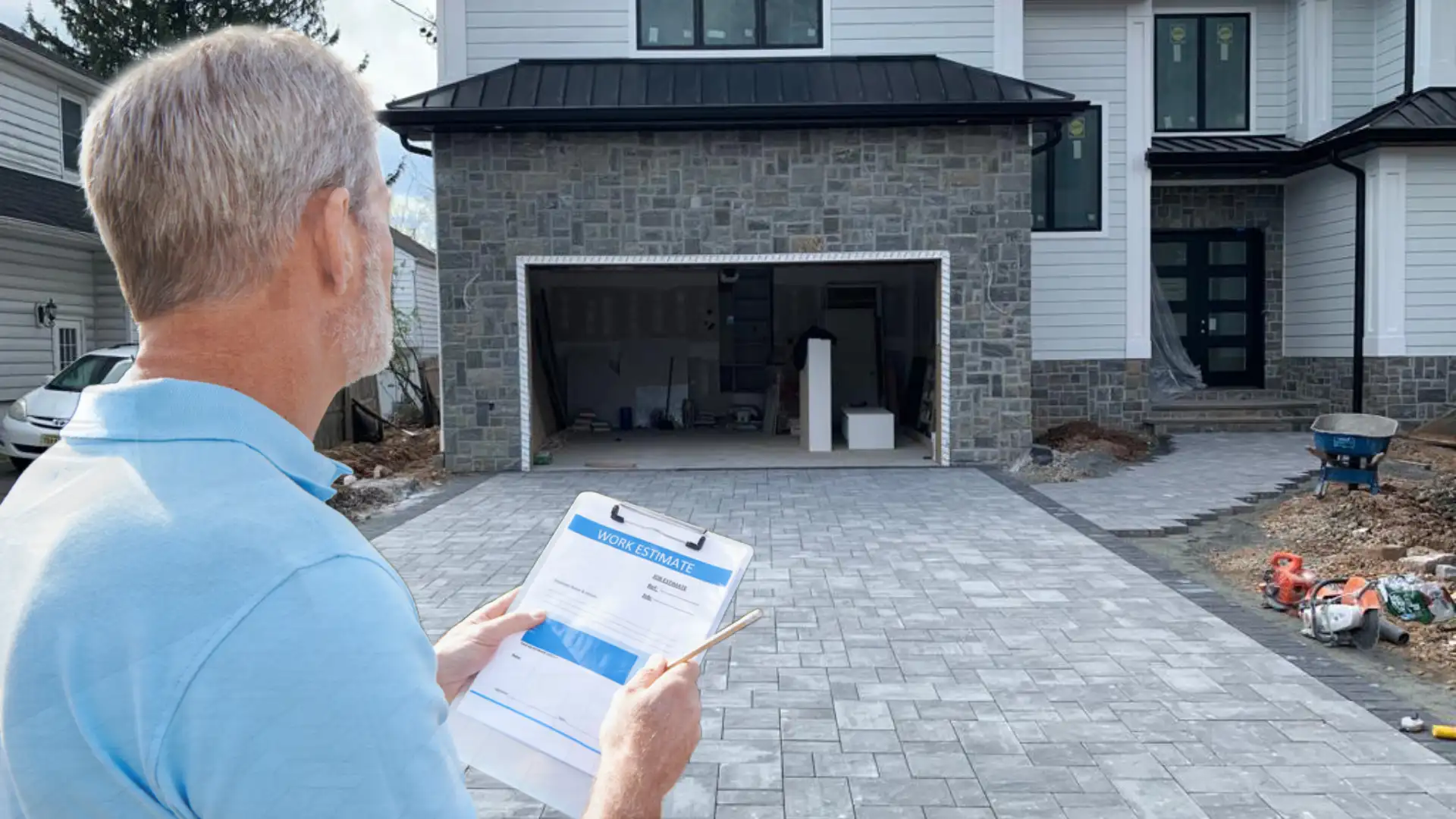
Get a Free On-Site Estimate
Call (201) 304-7345 or request scheduling now to scope your paving project: Contact pavers near me
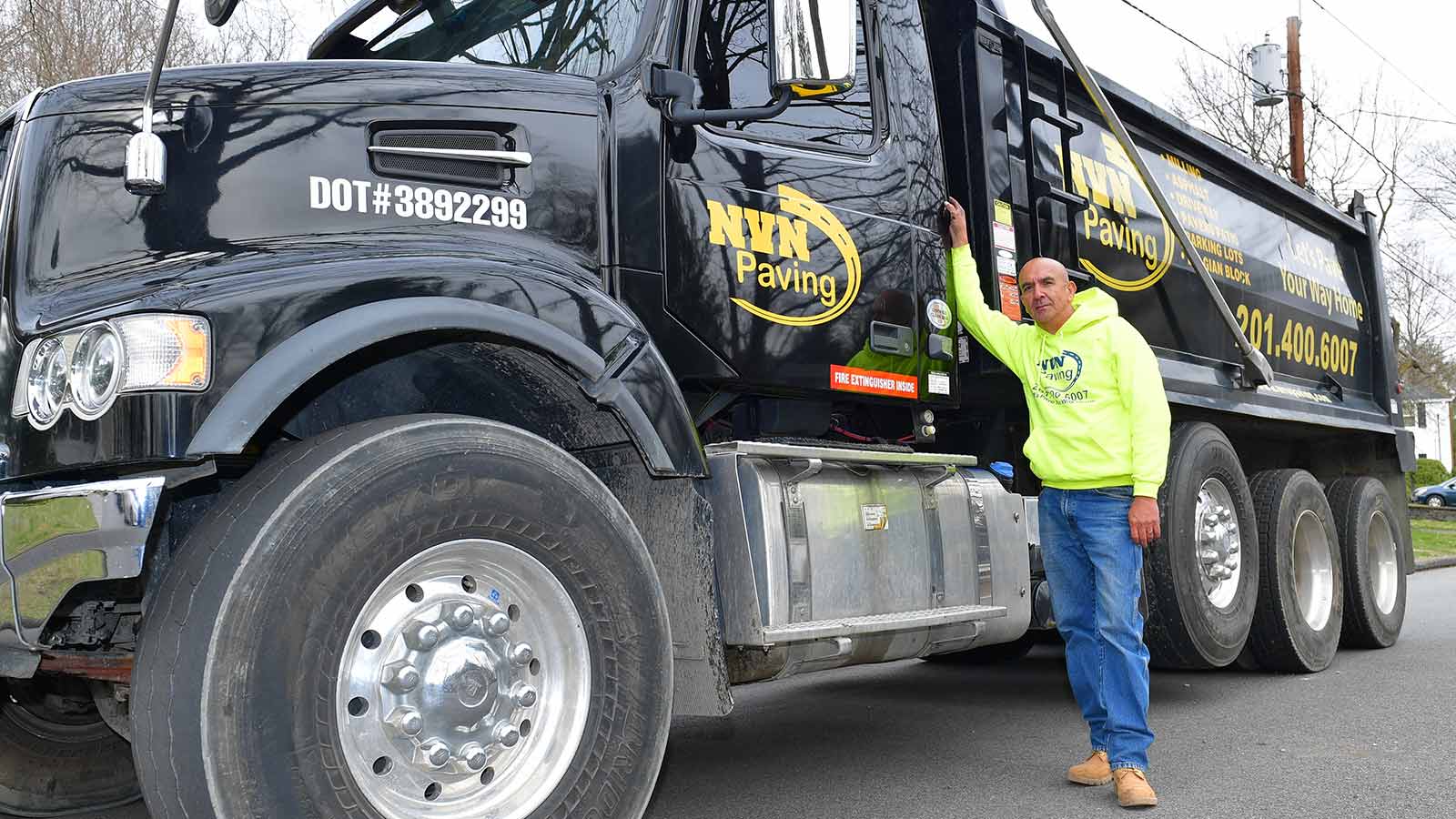
NVN Paving · Paving Company · Bergen County · NJ



